
The Cobham ATC Story Inside the UK Carrier Programme
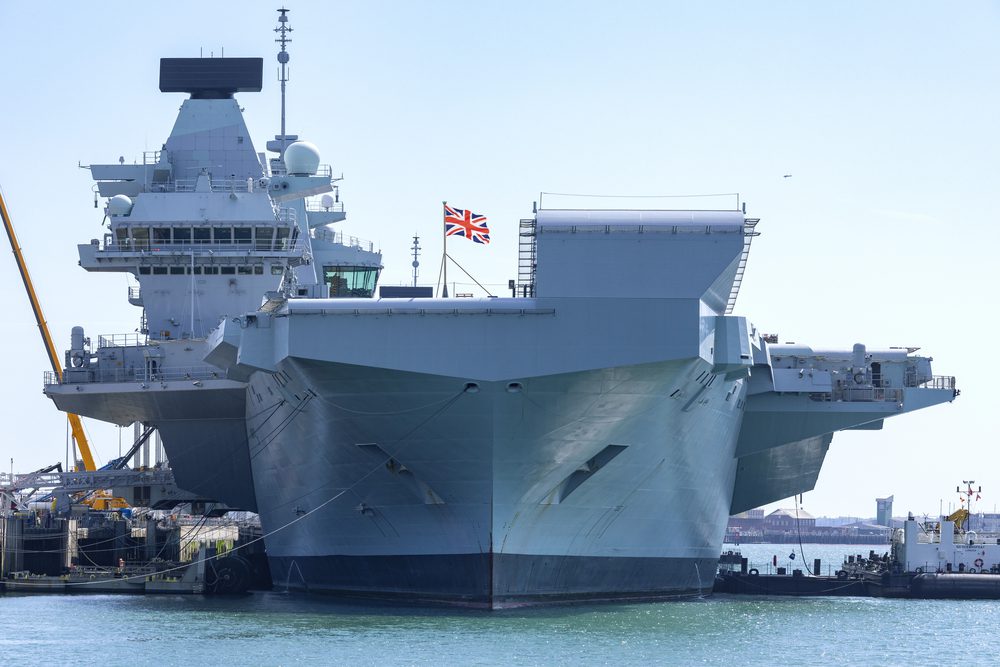
The UK’s new aircraft carriers began life in a state of organised confusion. Thales had won the original design competition, BAE Systems was later appointed prime for political and industrial reasons, and the relationship between them was, to put it politely, unsettled. Responsibilities shifted, architecture kept moving, and no one had a fully stable picture of the end state. It was a difficult moment for any subcontractor to walk into, yet that is exactly when Cobham Air Traffic Control Systems won the contract to build the carrier’s ATC software.
A Brief That Sounded Simple — And Was Anything But
Cobham asked for the requirements and were told, with complete confidence, that the system was essentially the same as a land-based airfield, only mounted on a ship. That statement would later prove spectacularly wrong. A carrier does not behave like a moving runway. It is a floating weapons platform with missiles, blast envelopes, dynamic airspace, shifting wind-over-deck conditions and a labyrinth of interlocking systems that have to be synchronised with ATC. The gap between what Cobham had been told and what the system actually needed to do was enormous.
Still, Cobham were eager to begin. They started engineering the system in good faith and made significant progress. But as BAE Systems gradually took firm control of the prime role, a torrent of new requirements arrived. These were not cosmetic changes. They cut to the heart of the architecture. Every assumption that had seemed sensible based on the original brief now had to be revisited. Worse, the money had largely been spent. Cobham were expected to cope, and to cope quickly.
For a while the team were pinned down by the sheer volume of change. The traditional V-model development process could not keep pace. By the time a design decision reached the test rig, the customer had already moved on. It was no longer development. It was archaeology.
Building a Cathedral While the Ground Moves
It was like trying to finish building a cathedral while the architects continued redrawing the plans — and the foundations shifted every few days. Any rigid process would snap under that kind of pressure. Cobham needed a way of working that bent without breaking.
Scrum as a Lifeline, Not a Fashion
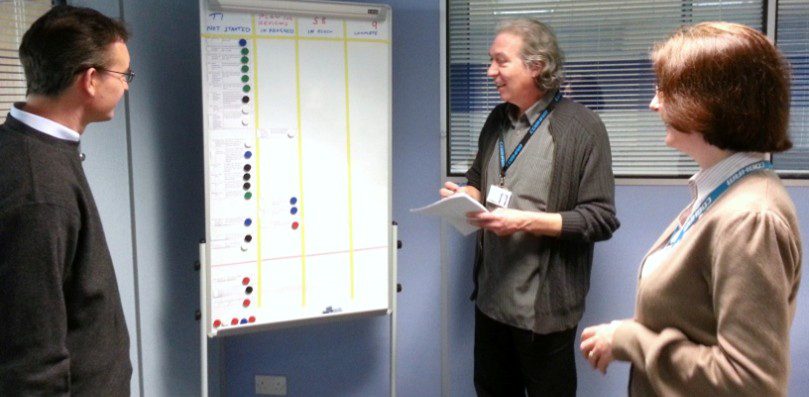
What Cobham did next was genuinely brave. They threw out the conventional development path and switched to Agile Scrum at scale. This wasn’t a superficial adoption. They built proper cross-functional teams, rewrote their planning system, created transparency, and accepted that the only way to survive in a volatile environment was to embrace the volatility fully. They focused first on the most stable requirements, then began a systematic refactoring of the entire codebase.
Scrum did something important. It restored their sense of pace. Instead of being knocked off balance by continuous change, they started to absorb it and convert it into momentum. Visibility improved, bottlenecks surfaced early, and BAE Systems, who had been a difficult customer up to that point, began to regain confidence as they saw working increments appear every sprint.
Where Mindsheet Entered the Story
It was during this transformation that Cobham brought Mindsheet in. My role was to examine the engineering discipline, assess whether Scrum was being applied correctly, identify the root causes of the original overruns, and strengthen the entire delivery system. What I found was a committed team who had pushed Scrum further, faster, and with more discipline than most defence organisations would dare. But they needed clarity on validation strategy, stronger instrumentation for debugging, and a more robust approach to dealing with the deeper architectural issues created by the shifting requirements.
I helped tighten the process, refine the engineering approach, guide the teams on how to handle volatile requirements safely, and bring a structure that allowed them to build confidence with BAE Systems while still delivering at pace. The real credit belongs to the Cobham engineers, but sometimes a team needs an outside voice who has seen this kind of chaos before and knows how to navigate it. That was the contribution Mindsheet made.
Turning Chaos into a World-Class Delivery Effort
Over the next year, Cobham became one of the most effective Scrum organisations in the defence sector. They untangled the architectural confusion, delivered working increments at speed, and gradually rebuilt trust up the chain. In the end, they delivered a fully functioning, safety-critical ATC system for the Queen Elizabeth-class carriers, in one of the most volatile contractual environments imaginable.
It is a story of resilience, adaptability and technical courage. Cobham were dealt a difficult hand and still found a way to win. Mindsheet played its part by helping them turn a spiralling situation into a controlled, disciplined, high-velocity engineering effort.
A decade later, the rest of the world uses Scrum. Cobham had to use it under fire. And they proved that in the right hands, agility is not a buzzword. It is a lifeline.
If Your Requirements Are Moving, You Need a System That Moves With Them
If your organisation is facing a situation where requirements shift faster than your teams can respond, the lesson from this project is simple. You cannot freeze the world. But you can build a delivery system that moves with it. And when you do, even the most complex projects become deliverable again.
If you want guidance turning volatility into momentum, Mindsheet can help. Let’s talk.