
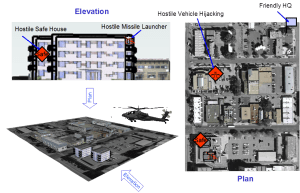
During operations in Afghanistan and Iraq, casualty rates from IEDs, ambushes, and close-quarters threats were rising sharply. Manual urban patrolling was expensive, slow, and dangerous — yet most ISTAR systems had been designed for open terrain rather than dense civilian environments.
Mindsheet was selected by Finmeccanica, via its SELEX-SAS division, to develop new Urban ISTAR concepts that could reduce risk to personnel and improve situational awareness, using an outcome-based innovation approach rather than incremental platform upgrades.
Designing for the Reality of IED-Driven Conflict
Urban conflict had fundamentally changed the nature of surveillance. Threats no longer appeared as visible formations but as patterns of behaviour, subtle anomalies, and weak signals embedded in everyday city life.
IEDs exploited these blind spots. They were cheap, adaptive, and effective precisely because conventional surveillance systems were optimised for detection rather than interpretation.
The challenge was not a lack of sensors or coverage. It was the absence of early insight — the ability to recognise hostile intent before a patrol encountered it.
Starting with Outcomes, Not Platforms
Rather than beginning with existing product lines or sensor technologies, the work started by identifying the operational outcomes that mattered most to military users.
These included reducing the frequency of manual patrols, improving early warning of abnormal activity, increasing confidence in threat classification, and lowering exposure to IED risk.
By structuring these outcomes hierarchically and assessing their relative importance, Mindsheet was able to identify where existing ISTAR solutions were underperforming and where innovation would deliver the greatest operational impact.
From Military Needs to New Urban ISTAR Concepts
Using a combination of stakeholder interviews, operational analysis, and technology assessment, Mindsheet translated military needs into credible, deployable Urban ISTAR concepts.
These concepts focused on anomaly detection, behavioural pattern recognition, sensor fusion, and rapid interpretation, rather than raw data collection. The emphasis shifted from observing more to understanding sooner — reducing the cognitive and physical burden placed on troops operating in high-risk environments.
Exposing the Hidden Supply Base
A defining insight from the project was that many of the technologies required to deliver these outcomes were not coming from traditional defence suppliers.
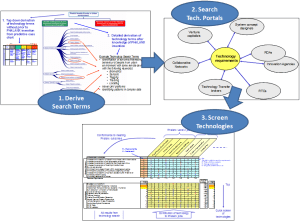
Through systematic analysis of patents, academic research, government-funded programmes, and collaborative R&D initiatives, Mindsheet identified a hidden supply base — organisations developing relevant capabilities but not yet active in the defence market.
This provided early visibility of future competitors and potential partners, allowing SELEX to anticipate market shifts and shape its strategy well ahead of formal market entry by these players.
Building an Outcome-Led Technology Roadmap
The project concluded with the development of a technology and product roadmap that explicitly linked military outcomes to enabling technologies and potential suppliers.
Rather than a static plan, the roadmap provided a living framework that SELEX could use to continuously scan for emerging technologies, evaluate their relevance, and integrate them into future Urban ISTAR capabilities.
Strategic Impact for Finmeccanica and SELEX
The engagement demonstrated how outcome-based innovation could be applied in one of the most complex and high-risk domains.
It enabled Finmeccanica and SELEX to:
- Reduce reliance on manual urban patrolling
- Address IED threats through earlier detection and interpretation
- Move from platform-centric to mission-centric innovation
- Anticipate disruptive entrants beyond the traditional defence supply chain
The result was not just new concepts, but a repeatable approach to future capability development.
This project was primed and co-delivered in collaboration with Professor David Hughes FREng and the Business Innovation Group, specialists in market-driven and outcome-based innovation. David played a pivotal role in shaping the engagement, identifying the opportunity within Finmeccanica and SELEX, and working closely with Mindsheet throughout the assignment. His expertise in uncovering emerging technologies and disruptive entrants — particularly within complex, high-value engineering domains — was instrumental in identifying the hidden supply base and framing the innovation challenge in outcome terms rather than legacy platforms. The collaboration combined strategic insight with rigorous execution and was central to the project’s success.
How Mindsheet Works
Mindsheet helps organisations innovate where failure carries real consequences. By starting with outcomes, understanding real operational constraints, and uncovering hidden sources of advantage, we help clients design solutions that matter — not just systems that look impressive on paper.
If you need to rethink capability development in complex, high-risk environments, Mindsheet can help.