
Behind Every Innovation Strategy Is a Human System
In 2006, Mindsheet partnered with Frost & Sullivan to support the Ford Motor Company on a project that, at first glance, appeared to sit outside our traditional focus on technology and innovation.
The brief centred on employment structures, contract models, and organisational frameworks within Ford’s German R&D environment. It initially seemed unusual that a firm known for innovation strategy would be involved.
However, the deeper purpose soon became clear. Ford was not simply reviewing HR policies. It was questioning whether its people architecture was enabling or constraining future innovation.

Why Were We Here?
At the outset, the engagement felt ambiguous. We were known for market strategy, innovation launch, and technology commercialisation. Employment tariffs and benchmarking exercises did not appear to fit that mould.
But as interviews progressed, a consistent tension emerged. Engineers, researchers, and technical leaders were operating within structures that limited flexibility just as global competition for talent was accelerating.
The conversation shifted from contracts to capability.
It became evident that innovation does not fail because organisations lack ideas. It fails when the people responsible for creating those ideas are constrained by systems designed for a different era.
What the Analysis Revealed
Working alongside Frost & Sullivan, Mindsheet contributed a strategic lens to benchmarking Ford’s approach against global peers including leading technology and industrial firms.
Key insights included:
- Employment frameworks were influencing innovation speed and decision autonomy.
- Competitors were adopting more flexible models to attract and retain high-value engineering talent.
- A looming shortage of technical specialists meant traditional structures risked becoming a strategic disadvantage.
- Organisational design was shaping not only culture, but the organisation’s capacity to innovate.
The project reframed a contractual discussion into a strategic one. The real issue was not policy compliance. It was future competitiveness.
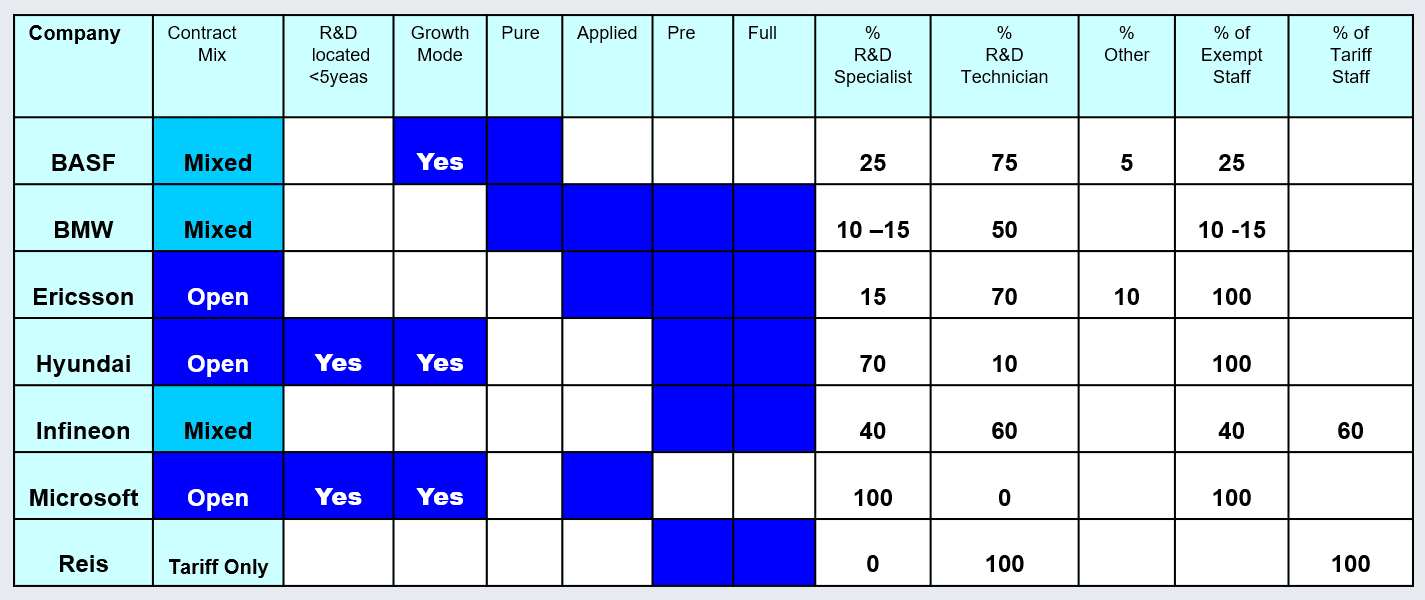
Innovation Is an Engine Built from People, Not Parts
Ford understood better than anyone that engineering excellence depends on how components work together. The same is true of innovation systems.
You can design the most advanced product roadmap in the world, but if the organisational engine that powers it is constrained, performance will always fall short.
The engagement showed that employment structures are not administrative details. They are the fuel system for innovation itself.
Strategy Through Organisational Insight
The project delivered more than a benchmarking exercise. It provided Ford with a clearer understanding of how structural decisions affected innovation capability across its R&D organisation.
What began as a review of employment models became a broader reflection on how to align people, incentives, and organisational design with long-term technological leadership.
For Mindsheet, it reinforced a fundamental truth. Innovation strategy is never just about technology. It is about the people who bring technology to life.
Design the Organisation That Your Innovation Strategy Needs
If your organisation is investing heavily in technology but struggling to translate ambition into execution, the answer may not lie in the roadmap. It may lie in the structure around the people expected to deliver it.
Mindsheet helps leadership teams uncover the hidden organisational barriers that limit innovation performance.
Talk to us before structure becomes the silent brake on your strategy.