
In 2017, Mindsheet was asked to help HFI Automotive, a $320m automotive interiors supplier based in Columbus, Ohio, create a clear, credible growth strategy.
The brief was straightforward: define where the business should go next and equip the leadership team to execute it. The resulting strategy was coherent, market-aware, internally owned, and intellectually honest.
And yet, it never had the chance to succeed.
This case study is about why good strategy sometimes fails — not because it’s wrong, but because reality is moving faster than strategy can.
The Business Looked Healthy — Until You Looked Closer
On the surface, HFI appeared successful. It supplied seating and interior systems to major OEMs including Honda, Toyota, Ford, GM, and Tesla. It operated at scale, with nine manufacturing plants in Mexico, and had recently been sold at a premium to a private equity firm.
But underneath the headline numbers was a fragile operating model.
HFI did not own the intellectual property it produced. Designs were owned by the OEMs. HFI acted as a capacity buffer — thriving when OEM demand overflowed, and starved when it didn’t.
Engineering teams were stretched thin across too many programmes. New vehicle “launches” required years of unpaid engineering effort before revenues arrived. Cash flow lagged badly behind commitments. Manufacturing operations in Mexico had become chaotic.
It was, in effect, a company running flat-out just to stand still.
When the new CEO came onboard, he inherited not just a strategy problem, but a timing problem.
Building the Right Strategy the Right Way
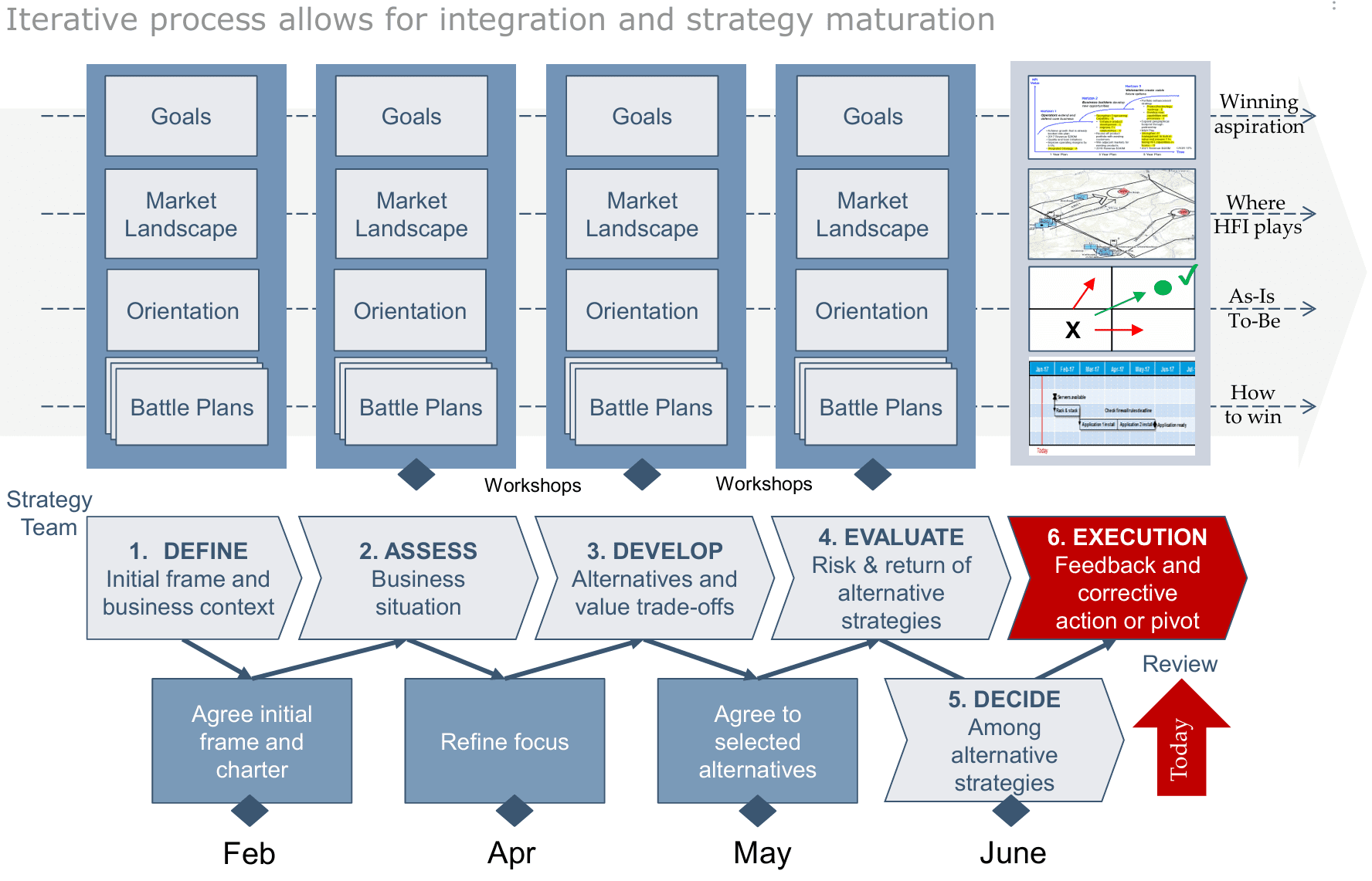
Rather than parachuting in a consultant-owned answer, Mindsheet worked with HFI’s internal marketing team to co-create the strategy, coaching them through the process so it could be repeated year after year.
The strategy correctly diagnosed HFI’s structural constraints:
- Tier-2 supplier economics
- No IP ownership
- OEM-controlled margins and volumes
- Volatile cash flow tied to launch cycles
It challenged unrealistic private-equity expectations of 12% margins and double-digit growth — targets that are rarely achievable in automotive without IP leverage.
On paper, it was exactly the strategy the business needed.

The Platform Was Already on Fire
What the strategy could not do was buy time.
By the time it was completed, operational reality had caught up with the organisation. Too many programmes. Too little engineering capacity. Manufacturing disruption. Delivery risk compounding month by month.
You cannot strategise your way out of an operational crisis on a one- to three-year horizon when the present quarter is already unstable.
The strategy was sound — but the runway was disappearing.
Before the strategy could be executed, leadership changes followed. The strategy became an orphan. Not because it was wrong — but because the organisation could no longer absorb it.

The Apple Lesson: Two Problems, Solved in Parallel
This situation mirrors a well-known moment in corporate history.
When Apple was near collapse in the late 1990s, Steve Jobs did two things at once.
He formed a small, protected team to invent the post-PC future — iPods, iPhones, the App Store.
At the same time, he ruthlessly simplified operations, killing product lines, concentrating resources, and extending the company’s cash runway.
One move created the future.
The other kept the company alive long enough to reach it.
HFI attempted the first — but did not have the scope, authority, or time to do the second.
A strong strategy cannot succeed if the platform beneath it is already burning.
The Real Lesson for Leaders
This case is not about bad strategy.
It is about sequencing.
When operational instability is existential, strategy must be paired with brutal, immediate stabilisation. Otherwise, even the best strategic thinking becomes irrelevant.
Strategy does not replace survival.
It depends on it.

HFI survived and continues to operate, working through the strategy over time as expectations were reset to match operational and market reality. Progress came not from abandoning strategy, but from aligning ambition with what the business could sustainably deliver.
The Mindsheet Perspective
At Mindsheet, we help leaders distinguish between:
- When strategy will unlock growth
- And when reality must be stabilised first
We don’t just help you decide where to go.
We help you decide whether you can get there in time.
👉 If you’re facing ambitious expectations on a fragile operating platform, let’s have an honest conversation before the window closes.