
The Brief
In 2005, Toyota Motor Europe invited us to tackle a nagging question:
Why were vehicle electronics still failing so often?
Cars had become rolling computers. But inside every bonnet was a hostile environment — heat, vibration, salt spray, thermal cycling — everything silicon hates.
Toyota wanted answers that went beyond the usual warranty analysis. They wanted a roadmap — one that tied semiconductor packaging technology to their lean manufacturing philosophy. That’s when Mindsheet teamed up with Frost & Sullivan to combine deep technical research with strategic industry insight.
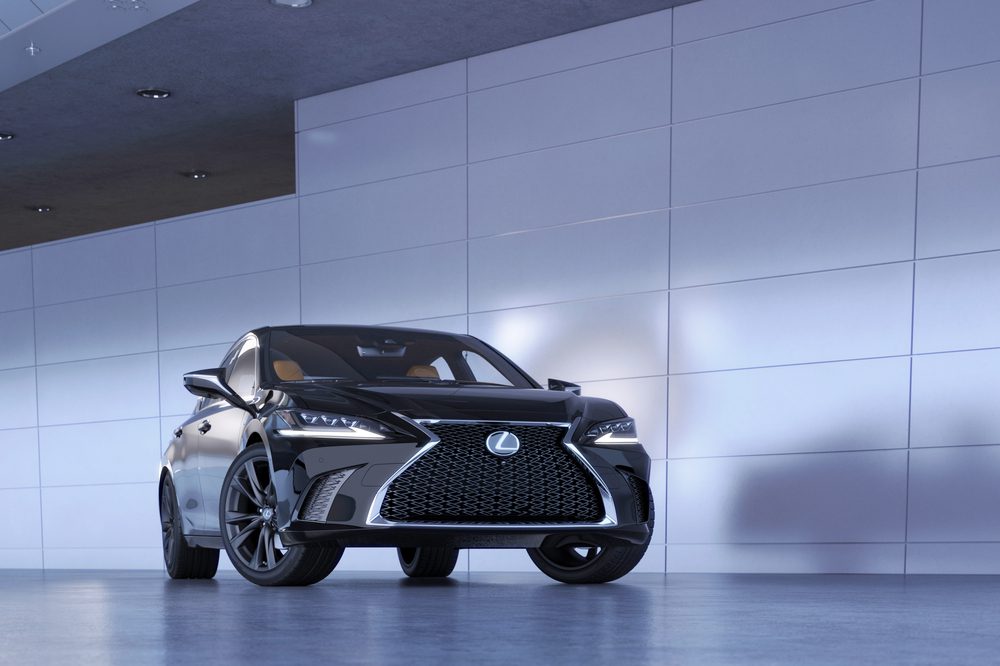
Getting Under the Bonnet
When we started, it was easy to blame the chips. But the real story was stranger.
The Electronic Control Unit (ECU) — the brain of the car — was indeed the most failure-prone component. Everyone accepted it. So engineers built in a way to replace it: connectors that allowed an ECU to be unplugged and swapped in minutes.
The logic was sound… until we looked at the data.
Those connectors turned out to be the second most unreliable component in the entire system.
By designing for failure, we had engineered it in.
It was one of those moments where engineering truth meets philosophical clarity.
The Technical Deep Dive
Our brief expanded. Together with Frost & Sullivan, we began a Europe-wide survey of advanced packaging technologies — System-in-Package (SiP), Stacked-Die, Flip-Chip, and Multi-Chip Modules.
We interviewed research leaders at Fraunhofer, IMEC, and ETH Zürich, analysed hundreds of patents, and mapped each technology’s potential to survive the brutal automotive environment.
Our findings were fascinating. Packaging wasn’t just a mechanical layer — it was the immune system of electronics. The right combination of die-attach materials, underfills, and substrate design could multiply reliability by an order of magnitude.
That changed everything. If we could make electronics that never failed, we could start deleting failure-driven design features: the connectors, the access hatches, even the bonnet.
The Bonnetless Car
We used that thought experiment to provoke new thinking inside Toyota.
What would a bonnetless car look like?
- No maintenance ports.
- No fragile access panels.
- Just sealed, solid reliability.
It wasn’t literal — nobody expected to weld the bonnet shut — but it gave Toyota’s engineers a north star: a reliability level so high that the need for access disappears.
Suddenly, reliability became a design enabler, not just a warranty statistic.
Results
- Technology roadmap: We identified breakthrough semiconductor packaging paths that could raise ECU reliability tenfold.
- Supplier expansion: Toyota formed new partnerships with non-automotive packaging specialists, diversifying its innovation base.
- Lean integration: The philosophy of designing out failure aligned perfectly with Toyota’s pursuit of waste elimination.
- Cultural shift: Reliability stopped being a defensive goal — it became a creative one.
As one Toyota executive gave us a typical lean insight afterwards,
“You helped us see that reliability is not about fixing things faster — it’s about not needing to fix them at all.”
Human Reflection
For us at Mindsheet, it was a lesson that technology and mindset evolve together.
A small insight — that connectors existed because of assumed failure — turned into a strategy that touched design, supply chain, and brand philosophy.
Working alongside Frost & Sullivan added a strategic lens to the science. Their market foresight complemented our technical analysis, helping Toyota translate a lab discovery into a global roadmap.
Legacy
That project shaped how we think at Mindsheet even today.
We still chase the same goal — whether it’s through advanced electronics or AI business diagnostics:
build systems so reliable that they don’t need fixing.
Where once we used chip packaging to achieve physical reliability, today we use AI to deliver organisational reliability — clarity, simplicity, and momentum at the speed modern business demands.
Call to Action
Clarity today. Quick wins this week. Results next week.
That’s how business should move in the AI era — calm, precise, and connector-free.